
The Appointment We Almost Put Off
Before this trip, we sat down with a travel doctor, filled out a form for every country on our route, and walked out with a list longer than either of us expected: rabies, meningococcal, polio, diphtheria, three doses of Hepatitis B, typhoid, yellow fever, tetanus, pertussis, a Tdap booster, MMR, and two doses of oral cholera. Some were required for where we were headed, most were simply the sensible baseline our doctor recommended once we saw the full itinerary. A few, like rabies, were optional. We took them anyway. Getting sick abroad with a vaccine in your system tends to mean a mild case instead of the full version.
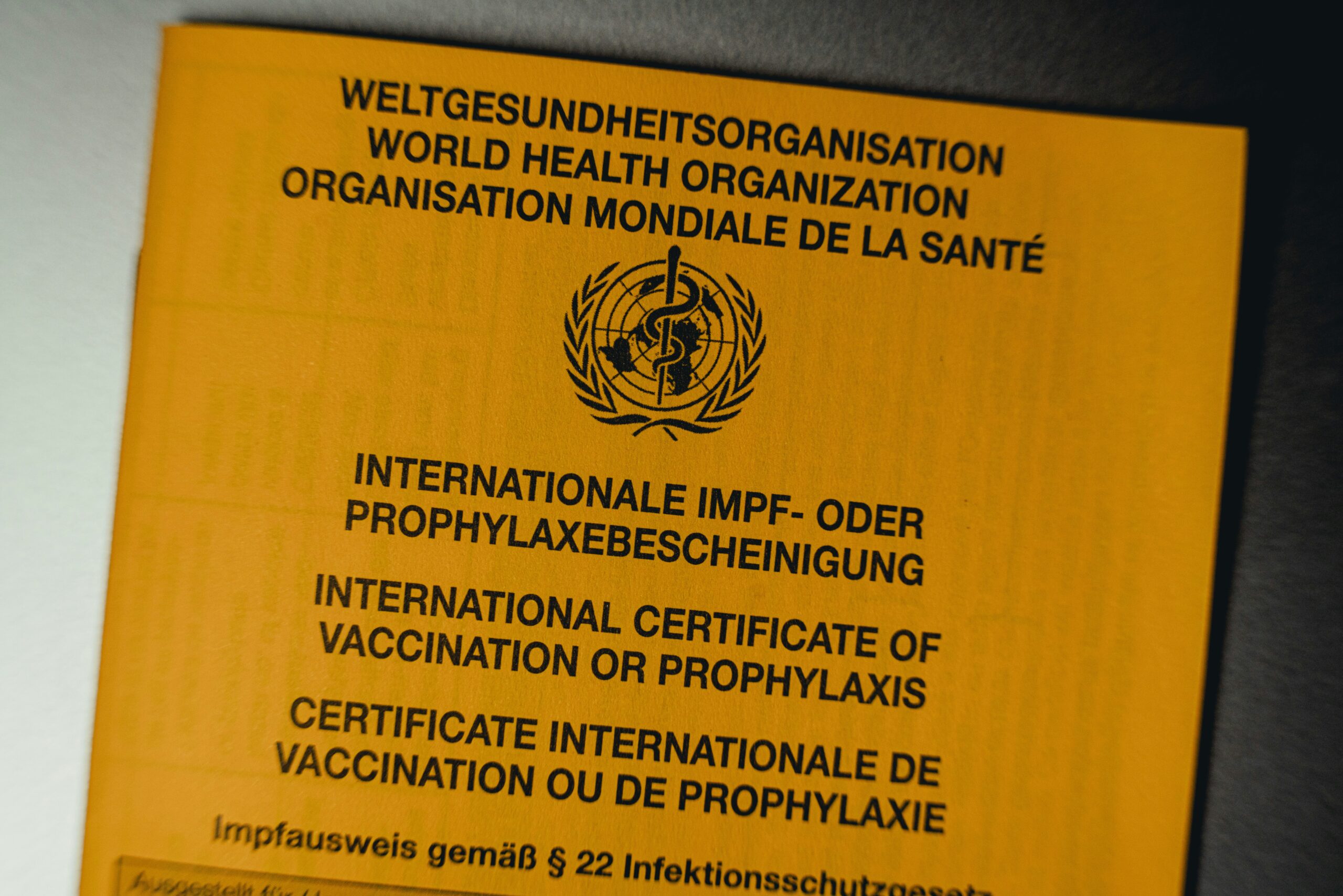
Fabienne got a good portion of that back through German health insurance. Jay, as a US citizen, paid the full amount with no reimbursement. Either way, budget for it well before you budget for flights.
Required, Recommended, or Just Sensible
Not every vaccine on a travel list means the same thing. Knowing the difference helps you actually plan, instead of just staring at a long list feeling overwhelmed.
Required
Legally needed for entry, most commonly yellow fever. No certificate can mean no entry, or a shot at the airport on arrival.
Recommended
Not enforced at the border, but advised by health authorities based on real disease risk at your destination.
Routine
The everyday vaccines you should already have regardless of travel: MMR, Tdap, polio, and similar.
Book your appointment 4 to 6 weeks before departure. Several vaccines need multiple doses spaced weeks apart, and some take time to become fully effective.
Don’t Take Our Word for It
We’re not doctors. What’s below is what we personally experienced and what we found in official sources while researching it. Always check directly before you book anything, since requirements change.
Pick a Country
A quick reference for what’s typically required or recommended, based on CDC and WHO guidance. Your own doctor has the final say once they know your full itinerary.
Checked and verified: September 2026. Entry rules and health guidance can change, always confirm with the official sources above before you book.
Germany
Routine vaccines only, no additional travel vaccines needed.
Just make sure your routine vaccines (MMR, Tdap, polio) are current per STIKO’s standard schedule.
Dominican Republic
Plus routine vaccines. Yellow fever isn’t required unless arriving from a country with yellow fever risk. Malaria risk exists in some provinces near the Haitian border; ask about antimalarials if you’re headed there.
Ecuador
Plus routine vaccines. Yellow fever is recommended, not required, specifically for Amazon provinces east of the Andes, and malaria prophylaxis may apply there too. Quito sits at high altitude, so budget time to acclimatize. The Galápagos and coastal cities generally carry lower risk.
Egypt
Plus routine vaccines. No malaria risk. Yellow fever is only required if arriving from a country with yellow fever risk. Avoid contact with Nile water due to schistosomiasis risk.
Spain
Plus routine vaccines. Low risk overall. Hepatitis A and rabies are sometimes considered for rural travel or long stays, but most travelers just need routine vaccines up to date.
United Kingdom
Routine vaccines only, no additional travel vaccines needed.
Routine vaccines up to date is generally sufficient.
Italy
Plus routine vaccines. Low risk. Hepatitis A is sometimes considered depending on region and travel style, but there’s no special requirement for most visitors.
Jamaica
Plus routine vaccines. No malaria risk generally. Yellow fever is only required if arriving from a country with yellow fever risk.
Morocco
Plus routine vaccines. No malaria risk. Rabies vaccination is sometimes considered for longer stays or travel involving animal contact.
Mexico
Plus routine vaccines. Malaria risk exists only in limited rural areas. No yellow fever requirement. Tick-borne illness has been reported in northern border states, so bug and tick precautions matter there specifically.
Netherlands
Routine vaccines only, no additional travel vaccines needed.
No special travel vaccines typically needed beyond routine ones.
Panama
Plus routine vaccines. Malaria risk exists in some regions; chikungunya is also a consideration.
Puerto Rico
Routine vaccines only, no additional travel vaccines required.
As a US territory, entry requirements match domestic US travel. Hepatitis A is sometimes considered as an extra precaution.
Portugal
Plus routine vaccines. Low risk overall. No malaria or yellow fever concerns for typical travel itineraries.
Türkiye
Plus routine vaccines. No malaria or yellow fever concerns. Rabies is sometimes considered for rural travel or extended stays involving animal contact.
Uganda
Plus routine vaccines. Uganda requires proof of yellow fever vaccination for entry for essentially all travelers aged 1 and older, regardless of where you’re flying from, and the shot needs to be given at least 10 days before arrival. Malaria prevention medication is expected for the entire country, not just certain regions, so we’re counting it as effectively required here even though it’s technically a personal health recommendation rather than an entry rule.
United States
Routine vaccines only, no additional travel vaccines needed.
Routine vaccines up to date is generally all that’s needed for most visitors.
This is general reference information, not personal medical advice. Your own itinerary, health history, and how long you’re staying all change what actually applies to you. Talk to a travel doctor before you book anything.
Malaria Isn’t a Vaccine
A few countries on our route carried malaria risk, and there’s no vaccine we personally took for that. Instead, it’s prescription pills on a set schedule: start a few days before entering a risk area, keep taking them the whole time you’re there, and continue for about 6 days after you leave. We carried a starter supply from Germany, but the same medication is easy to find locally in most of these countries too, so it’s not something you need to overpack out of fear of running out.
Before You Ask
Do we actually recommend getting all of these?
We got what our travel doctor recommended for our specific route. Some vaccines, like rabies, were optional for us and we chose to get them anyway. What you actually need depends entirely on where you’re going and how long you’ll be there.
Can you get vaccinated once you’re already traveling?
Sometimes, yes, and it’s often cheaper abroad. But several vaccines need time to become effective or require multiple doses spaced weeks apart, so getting them last minute or mid-trip isn’t ideal for full protection.
Is this the same list for every country?
No. Ours was based on a specific multi-country route. Use the country list above as a starting point, then confirm with a travel doctor based on your actual itinerary.
Vaccines sorted. Now the coverage.
Insurance is the other half of staying covered abroad. Here’s what we actually use and why.
See travel insurance